Whether it is a significant flood or a small leak, when you engage a restorer to help with the clean-up, it is crucial you are both on the same page about what the end result should look like. You need a checklist, you need to understand it, and you should have an independent IEP (Indoor Environmental Professional) guide you through it. This checklist should be used by you and all other parties involved — during works and, most importantly, after.
What is a Post-Remediation Verification?
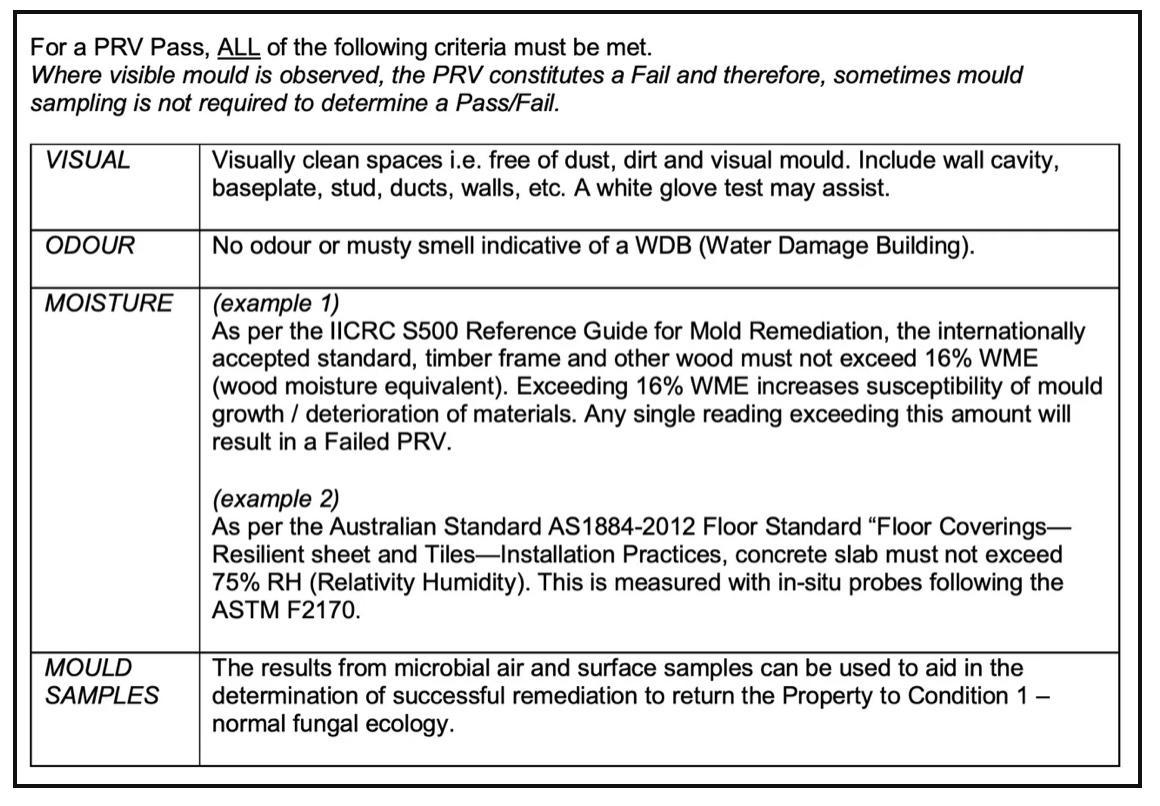
After remediation activities are complete — before any new materials are brought in and before containment is removed — it is best practice to conduct an official Post-Remediation Verification (PRV). The purpose of a PRV is to confirm that remediation has been completed in accordance with the established standards: AS-IICRC S500:2025 and AS-IICRC S520:2025, the official Australian Standards for water damage restoration and mould remediation.
It is essential that the PRV is conducted by an independent third party. This ensures the remediation was not just performed to meet minimum requirements, and that it was not compromised by any conflict of interest.
Note: it is common for a restorer to conduct their own Post-Remediation Evaluation (PRE) prior to the independent PRV being carried out. These are not the same thing. A PRE is self-assessed. A PRV is independent.
A basic PRV checklist — free template
Below is a starting point for a PRV checklist that you can use as a guide. An IEP would include this as part of a more comprehensive report, but this gives you a framework for the conversation with your restorer and your assessor.
- Moisture readings: All affected materials have been dried to within manufacturer guidelines and pre-loss moisture content
- Visual inspection: No visible mould growth, staining, or residue in affected or adjacent areas
- Air sampling: Indoor spore counts are consistent with or better than outdoor control samples
- Surface sampling: No evidence of residual mould contamination on tested surfaces
- Containment: Containment was properly established and maintained throughout works
- HEPA filtration: Negative air pressure and HEPA filtration were used during remediation
- Disposal: All contaminated materials were correctly bagged and removed from the property
- Documentation: All works have been documented by the restorer in writing
Why this matters before reinstatement
Installing new materials — flooring, plasterboard, insulation, cabinetry — or returning your belongings to a property before an independent PRV pass opens you up to significant risk. If a PRV fails after reinstatement, the cost of remediation increases substantially. Sometimes a PRV fails for reasons outside the restorer's control. It is always in the homeowner's interest to be certain the job is complete before anything goes back in.
When selecting a restorer, ask whether they hold IICRC certification. This is the baseline standard for the industry.
If you are navigating water damage or a mould remediation project and need independent guidance, contact MJ Building Bio. Having your own IEP from the start is the single most effective protection against outcomes that fall short of what was needed.