Most of the time when my phone rings, it is the voice of a very distressed woman. It is either her or the kids who are sick, or worse, all of them. The symptoms range from allergies and rashes to chronic fatigue, extreme weight changes, sleeping issues, mood swings, and hallucinations. One thing all of these women have in common is that they are experiencing a range of inconsistent symptoms that are getting worse — and not a single health practitioner can explain why.
These women are warriors. They push through, and thankfully, some of them eventually come across building biology. That is usually when I get the call.
Meet Miranda
Name changed for privacy.
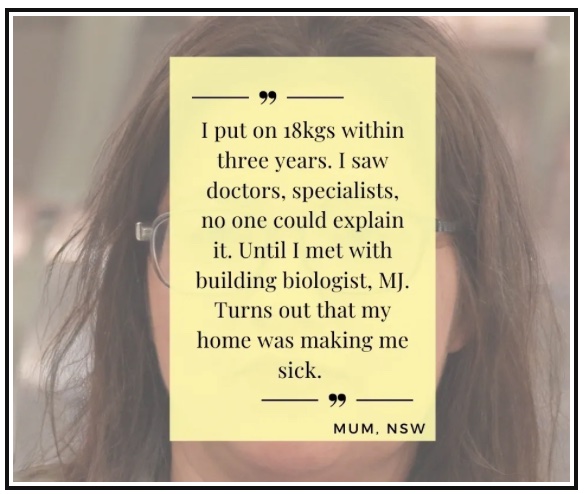
Miranda is 50 years old, a mother who works from home. She has always been proactive with her health and loves sport. Over the past three years she had gained 18kg. As the weight increased, she exercised more and ate less. Other symptoms appeared: sleep disturbances, swelling of her feet, an eyelid issue, a sore arm — at least a dozen evolving symptoms. Then she stopped being able to exercise at all and began to struggle emotionally.
Specialists attributed it to menopause, despite some of the symptoms making no sense in that context. Things continued to get worse. Miranda called me and said: "There is something wrong with me and I cannot work it out. Could it be anything in my house?"
The inspection
I packed up the car and hit the road. When I walked into Miranda's home, I wondered how on earth this could be a sick building. It was relatively new — a concrete slab, no signs of water ingress or plumbing issues. The inside was one of the cleanest homes I had ever seen. Her personal care products had some room for improvement, but overall it looked like the ideal healthy home.
We went through the pre-assessment questionnaire, talked through her symptoms and their timeline, ruled out possibilities one by one. Then I found it.
She cleaned her carpets regularly. I lifted them up — and there it was. Patchy areas of moist, mouldy carpet underlay. Rusted nails. Rotting smooth edges. Miranda was in disbelief. She had been certain the carpets dried quickly enough after each clean, for three years.
Around 24% of the population do not have the antibodies to process mould toxins when exposed. For these individuals, repeated low-level exposure does not clear — it accumulates, and the effects can be severe.
Why women may be particularly affected
Women may be more susceptible to the negative health effects of environmental toxins, particularly those that disrupt hormone signalling, due to the unique hormonal changes they experience throughout their lives. Mould exposure has been linked to chronic inflammation, which can disrupt the body's hormonal and metabolic processes — leading to changes in appetite, metabolism, and fat storage, among many other serious effects.
Symptoms that present as hormonal or menopausal in origin are sometimes rooted in environmental exposure. This connection is rarely explored in a standard GP consultation.
The outcome
Miranda is now on the road to recovery. She is working closely with an integrative practitioner who specialises in mould illness, helping her detox and reclaim her health.
As for her home — the carpets were safely removed by professionals who set up containment and filtration equipment first. The house was cleaned using the HEPA sandwich method. Some soft furnishings, including beds and couches, were replaced after testing confirmed contamination.
If you or someone you know has unexplained symptoms that no one can explain, your home is worth investigating. It is one of the most overlooked factors in chronic illness — and one of the most fixable.