 MJ Building Bio
If you have been spending time in mould support groups online, you have probably come across two things. People recommending DIY testing. And people saying they cannot afford a building biologist.
Both are understandable. But before you spend money on a test that may give you more confusion than clarity, there are some things worth knowing.
The petri dish kit: a legitimate tool, completely wrong application
Petri dishes have a genuine place in microbial testing. In controlled settings such as hospitals and laboratories, they are used with a mechanical sampling unit — a device that draws a precise, calibrated volume of air through the dish over a set time period. The result is a repeatable, measurable sample that trained professionals can interpret in context.
What is sold to the general public is something entirely different.
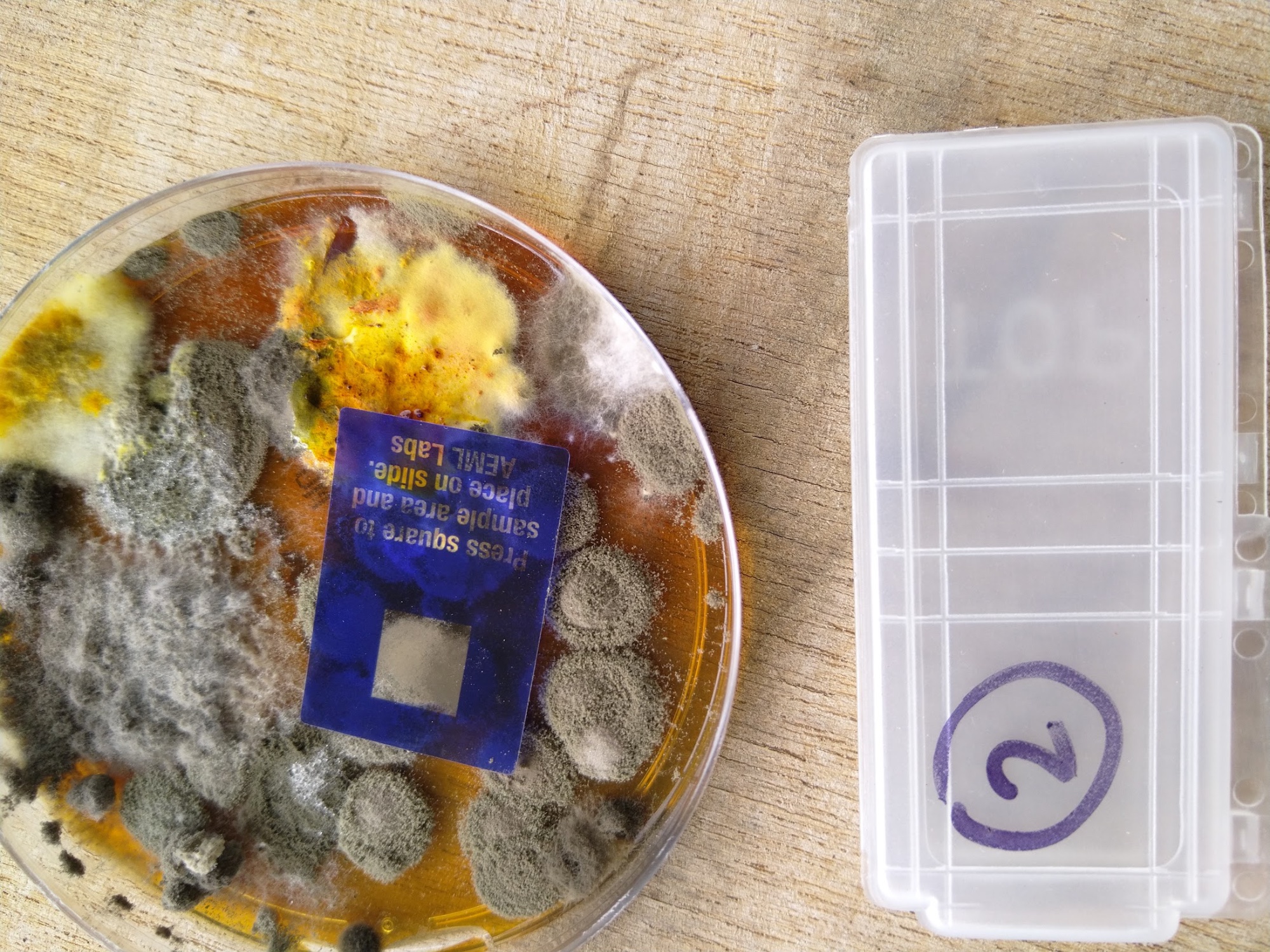
DIY petri dish kits ask you to leave a dish open in a room for a day or two and see what grows. There is no machine. No controlled airflow. No measured volume. No way to know how many spores passed over it, how quickly, or whether the conditions in the room on that particular day were representative of anything at all.
The most critical flaw: Petri dishes only capture viable spores — those that are alive and capable of growing. They completely miss non-viable spores, which are dead but may still contain mycotoxins and cause serious health effects. Research shows that around 75% of mould spores are non-viable. A petri dish ignores all of them.
A clean dish does not mean your home is safe. It may mean that not enough air passed over the dish for spores to settle on it. Or it may mean that the mould species present cannot grow on that particular growth medium at all.
Research shows that nearly 80% of mould species go undetected using the settle plate method.
This test does not give you information. It gives you a false sense of either alarm or reassurance. Neither is useful.
ERMI: a research tool being used as something it was never meant to be
ERMI (Environmental Relative Moldiness Index) was developed by US EPA researchers to study the relationship between mould in homes and the development of asthma in children. It analysed dust samples from over 1,000 American homes using DNA testing across 36 mould species.
It was a research tool. It was never validated for assessing individual homes.
The EPA's own position is unambiguous: ERMI is a research tool and is not recommended for use except as a research tool.
The specific problems for anyone using it in Australia:
- It only covers 36 mould species. Newer research shows this captures less than 15% of species commonly found indoors. The mould you are most worried about may not even be on the list.
- It measures dust, not air. It reflects historical accumulation, not current conditions.
- It has no Australian baseline. The scoring system was built on data from American homes. Australian homes, climates, and outdoor mould profiles are entirely different. The benchmark you are being compared against was never designed for your environment.
- It cannot tell you where the mould is coming from. Even a high score gives you no information about which room, which wall cavity, which material, or which moisture source is responsible.
HERTSMI: narrower, not better
HERTSMI-2 is a derivative of ERMI that tests for only five mould species associated with Chronic Inflammatory Response Syndrome. It is cheaper, which makes it appealing. But testing for five species when your home may contain many more is not a meaningful picture of what is actually there.
The critical Australian problem with both tests
This point is rarely made and it matters enormously.
When a qualified assessor conducts standard air and surface sampling, the results can be directly interpreted against the Australian Mould Guidelines — a recognised framework used by professionals in this country to determine what findings mean, what condition a property is in, and what should happen next.
ERMI and HERTSMI results cannot be referenced against the Australian Mould Guidelines at all. They sit entirely outside the framework. So even if your result suggests a problem, there is no Australian guideline against which to interpret it, no recognised pathway from that result to a remediation decision, and no professional in this country who can use it as the basis for compliant recommended works.
You would still need a proper assessment. Which raises the question of what the test achieved.
The real problem with DIY testing: the results
Even if you choose a better testing method than a petri dish, the results themselves are the problem.
Laboratory mould results are complex. They are rarely black and white. Trained assessors regularly spend significant time interpreting what results mean because they must always be read in context alongside moisture readings, thermal imaging, visual observations, building history, and outdoor control samples.
If two trained professionals can disagree on what results mean, it is not reasonable to expect someone without that background to interpret them accurately and make decisions about their home on that basis.
Getting it wrong in either direction is costly. Miss something and you continue living in a home affecting your health. Overreact to a result without context and you could spend tens of thousands on remediation that was never necessary.
The cost argument turned around
The most common reason people turn to DIY testing is cost. A professional assessment feels expensive. A kit feels affordable.
Consider this. An MJ Building Bio assessment fee varies depending on the property size, complexity, and scope of testing required. Inside that cost is expert, tailored advice about exactly what is in your home, what it means, and what needs to happen next. That advice can dramatically reduce remediation costs. If you know precisely what is affected and what is not, you can make informed decisions that could save you significantly on unnecessary work.
Here is something most people do not know. The cost of a DIY kit is roughly the same as a short consultation with a specialist who can guide you through targeted DIY surface testing where appropriate. It is not ideal. But it is infinitely more useful than testing alone.
An assessment report can also include practical DIY guidance for those who cannot afford full professional remediation. Knowing exactly what needs to happen — and how to do some of it yourself safely — is only possible when you know what you are actually dealing with. A DIY test kit cannot give you that. A proper assessment can.
What to do instead
If you genuinely cannot afford a full assessment right now, contact MJ Building Bio before purchasing any kit. A short conversation about your specific situation may save you money and point you in a more useful direction.
If you are sick, suspect mould, or have had water damage, get a proper independent assessment. Not a number from a dust sample or a petri dish.
The whole picture. That is the only thing that gives you answers you can actually act on.